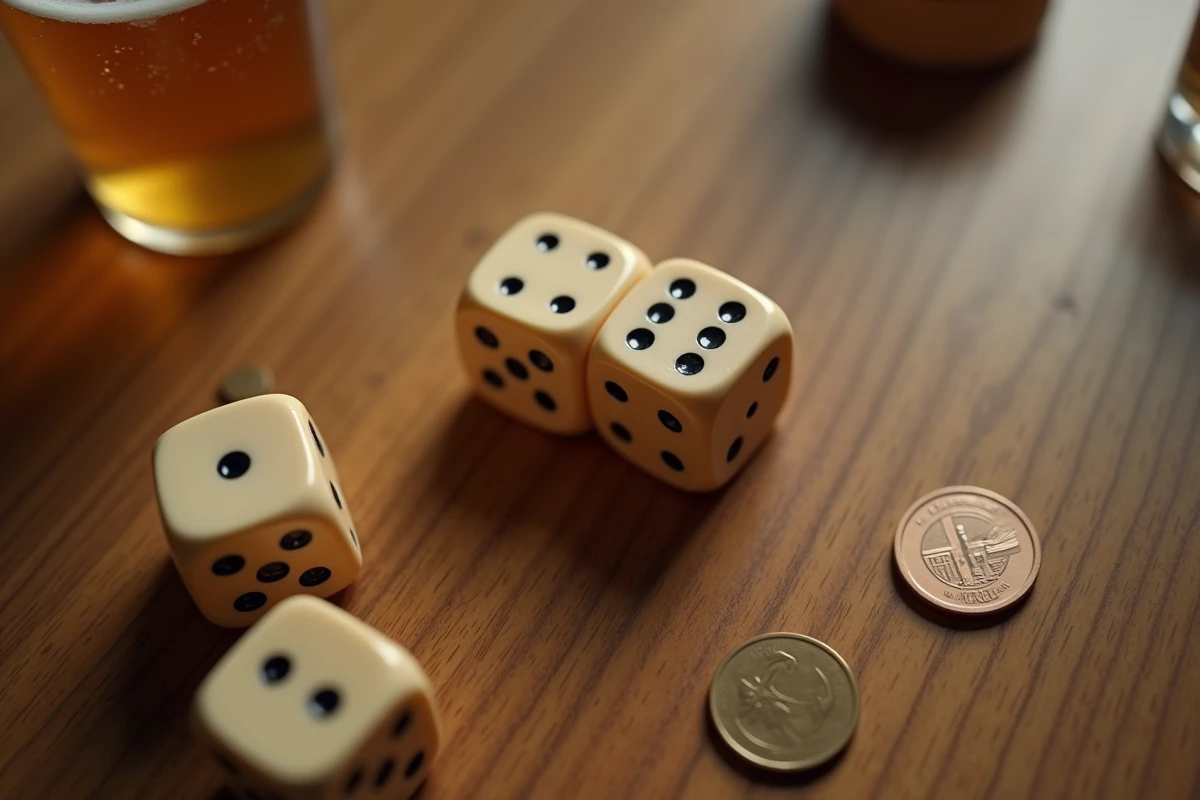
The 421 is based on a hierarchy of combinations and a load/unload mechanism that most guides describe in the same way. Instead, we will delve into the points that actually change a game: the gap between counter practice and framed or digital formats, the vocabulary subtleties that trap newcomers, and the strategic choices that the short format imposes.
Digital 421 vs. Counter 421: What Changes in Combinations
Mobile applications and online mini-games that offer 421 do not all reproduce the same hierarchy of combinations. Some digital versions modify the ranking of thirds or doubles, or even introduce unlockable variants absent from the oral tradition of bars.
At the counter, the hierarchy is transmitted orally and varies from region to region. The 4-2-1 still dominates, followed by the combinations 1-1-1 (nénette), then by descending series (6-6-6, 5-5-5, etc.). In the digital version, the ranking is fixed in the code, which removes any prior negotiation between players.
This rigidity has a direct consequence: online, a player cannot propose a local variant before the game. When you find the rules of 421 explained on HyperScoop, the ranking presented corresponds to the most widespread version in French cafés, not necessarily to that of the application you are using.
Another notable difference: tokens are managed automatically in digital versions. The player no longer handles the pot, nor counts their chips manually. This detail may seem trivial, but it removes a real tactical component: at the bar, monitoring the opponent’s token stock is part of reading the table.

421 Vocabulary: Terms that Distinguish a Regular Player
The lexicon of 421 goes far beyond the trio “load, unload, nénette” that all guides list. We observe that mastery of vocabulary conditions the fluidity of a game, especially in group animation or corporate evenings where participants discover the game.
- Nénette (1-1-1): the second strongest combination after the 4-2-1. Often confused with a classic three-of-a-kind by beginners, while it has a separate status in the hierarchy.
- Baraque: refers to a three-of-a-kind (three identical dice other than 1-1-1). The value descends from 6-6-6 to 2-2-2. In structured animation, the facilitator often specifies this term from the beginning to avoid disputes.
- Chip or token: the unit of penalty. The pot contains a number of chips shared at the beginning of the game. The loser of each round takes chips from the pot (load) or gives theirs (unload).
- Make the round: re-roll the three dice. In short appetizer format, each player generally has a maximum of three rolls per turn, which reduces the margin for maneuver compared to long variants.
In a digital context, some of these terms disappear from the interface in favor of icons or automatic scores. The oral vocabulary, however, remains alive in clubs and bars.
Short Format Strategy: The Trade-offs of Load and Unload
The short format (two to three rounds, quick elimination, frequent player rotation) profoundly alters optimal decisions. In long format, a player can afford a slow and cautious load. In short format, every roll counts double in terms of risk.
When to Keep a Die and When to Re-roll Everything in 421
The basic rule remains simple: if the first roll gives a 4 or a 1, keep it. The difficulty arises on the second roll. Keep an average die (a 3 or a 5) to secure a small combination, or re-roll everything hoping for a 4-2-1?
In short format, we recommend prioritizing safety during the load phase. Recovering few chips but regularly is better than a spectacular failed attempt that leaves the pot intact. The logic reverses in unload: a player loaded with chips must attempt strong combinations to unload quickly.
Adapting Strategy in Animation or Corporate Evening
In a structured setting (camp, team-building, leisure center), 421 often serves as a tool to introduce risk management and decision-making under uncertainty. The facilitator sometimes simplifies the rules: one roll per turn, no unload phase, direct elimination of the loser.
These simplifications change the nature of the game. Without unload, the comeback dimension disappears. Without multiple rolls, the element of chance increases and strategy is limited to the choice of whether or not to keep a die after the first roll. 421 then becomes a pure party game, which aligns with the goal of group cohesion but strays from the technical game practiced at the bar.
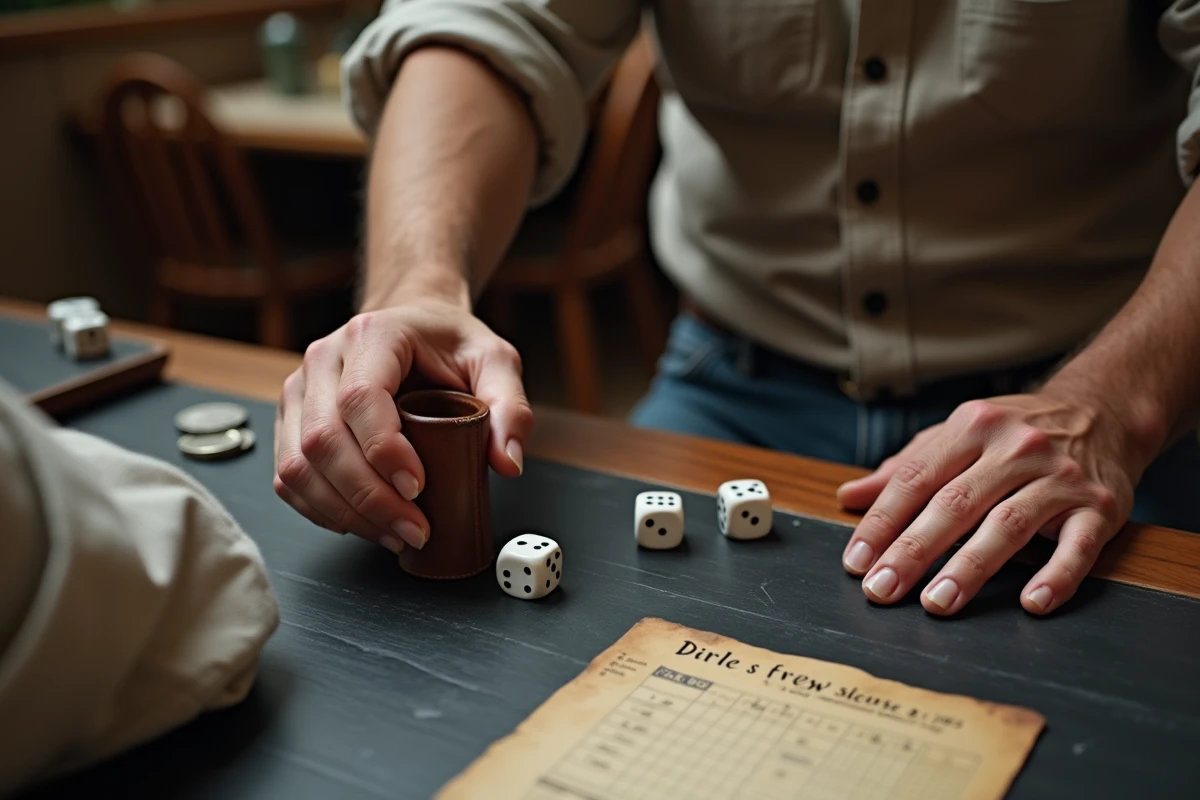
Transitioning from the Bar to the Family Table: Adapting the Rules of 421
421 also works as a family game, provided the number of chips in the pot is adjusted. With children, reducing the pot to about ten tokens shortens the game and maintains attention. The minimal equipment (three dice and tokens, replaceable by matches or coins) makes it an accessible game without investment.
The real adaptation concerns the number of rolls allowed per turn. Moving from three to two rolls simplifies the calculation for younger players while preserving the choice mechanism. However, completely removing the ability to keep a die between rolls kills the tactical interest.
421 remains a game whose richness lies in the gap between its written rules and its real practice. Whether the game takes place at a bar, in an application, or around a living room table, it is the prior negotiation on accepted variants that determines the quality of the experience. One piece of advice: set the hierarchy of combinations before the first roll, not after the first dispute.