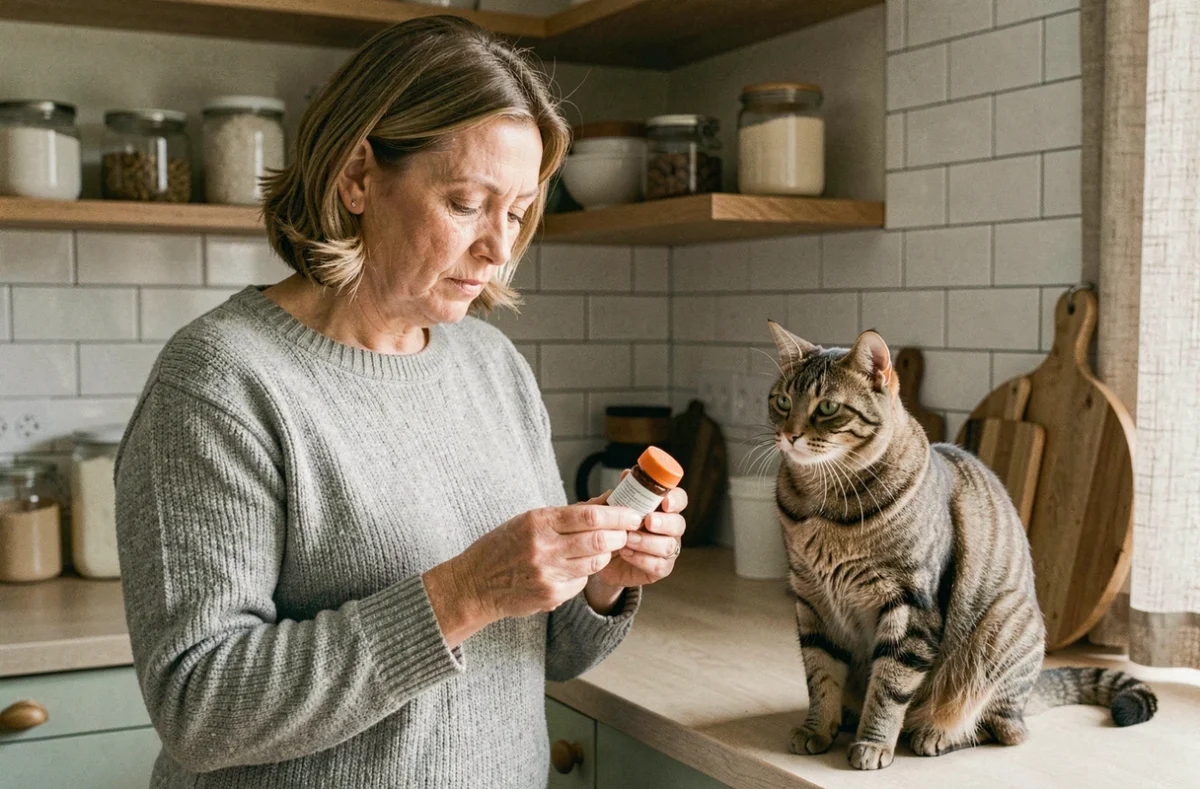
Your cat was supposed to have its Metacam this morning, but now you’re not sure: did it swallow the dose, spit it out, or was it missed altogether? This is more common than you might think, and what you should do depends entirely on the answer.
Meloxicam, the active ingredient in Metacam, is a non-steroidal anti-inflammatory drug prescribed to relieve pain and inflammation in cats. While effective, it has a narrow safety margin, so any dosing error could be serious.
Dose spat out, vomited or missed: three situations, three different responses
Before deciding what to do, ask yourself one simple question: did your cat actually swallow the medication? The right course of action differs depending on whether the dose was spat out, followed by vomiting, or missed altogether.
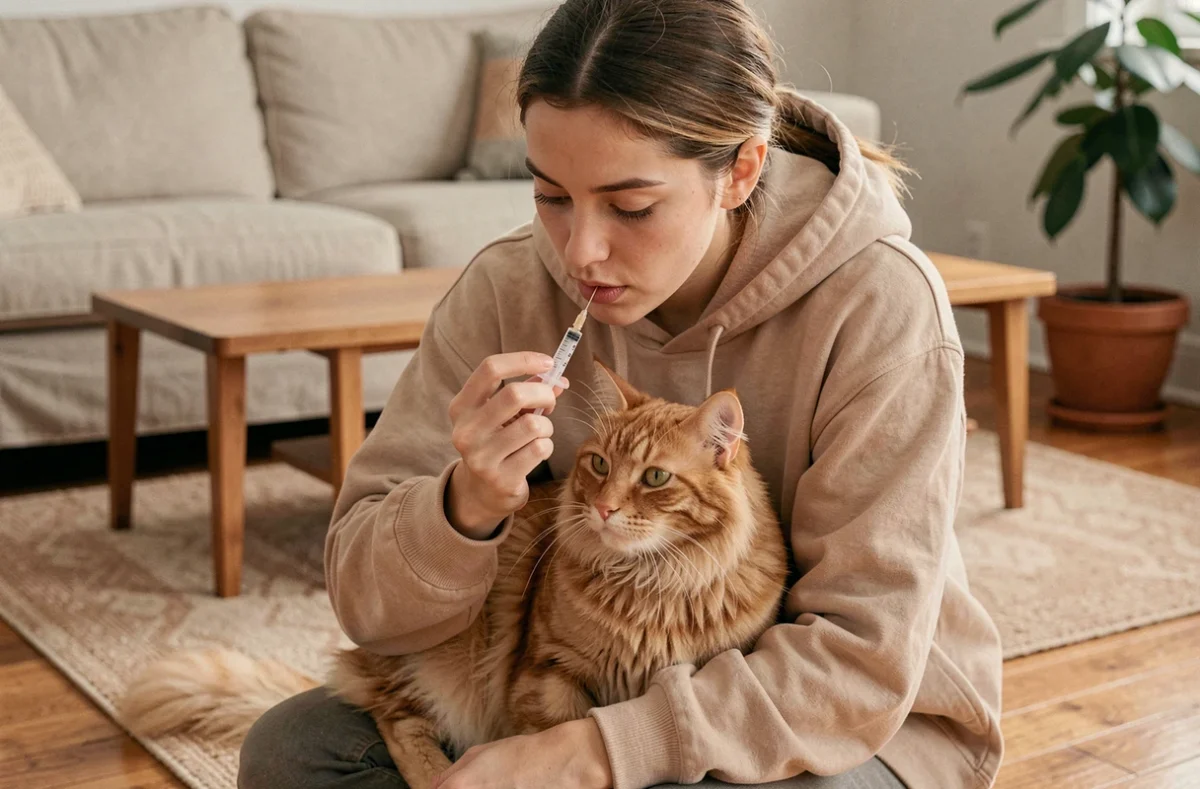
If your cat spat out the suspension a few seconds after you gave it, some of the meloxicam may have reached the oral mucous membranes and started to be absorbed. Giving a full dose again in this situation could result in a partial overdose. It’s best to note the time and contact your veterinarian before giving any more medication.
If your cat vomits within minutes of taking the medication, it’s unclear how much was actually absorbed. Again, knowing what to do after missing a dose of Metacam for cats starts with calling your veterinary clinic and explaining how long after the dose the vomiting occurred.
If the dose was simply missed, never double the next dose to make up for it. Resume treatment at the usual time for the next scheduled dose, unless your veterinarian advises otherwise.
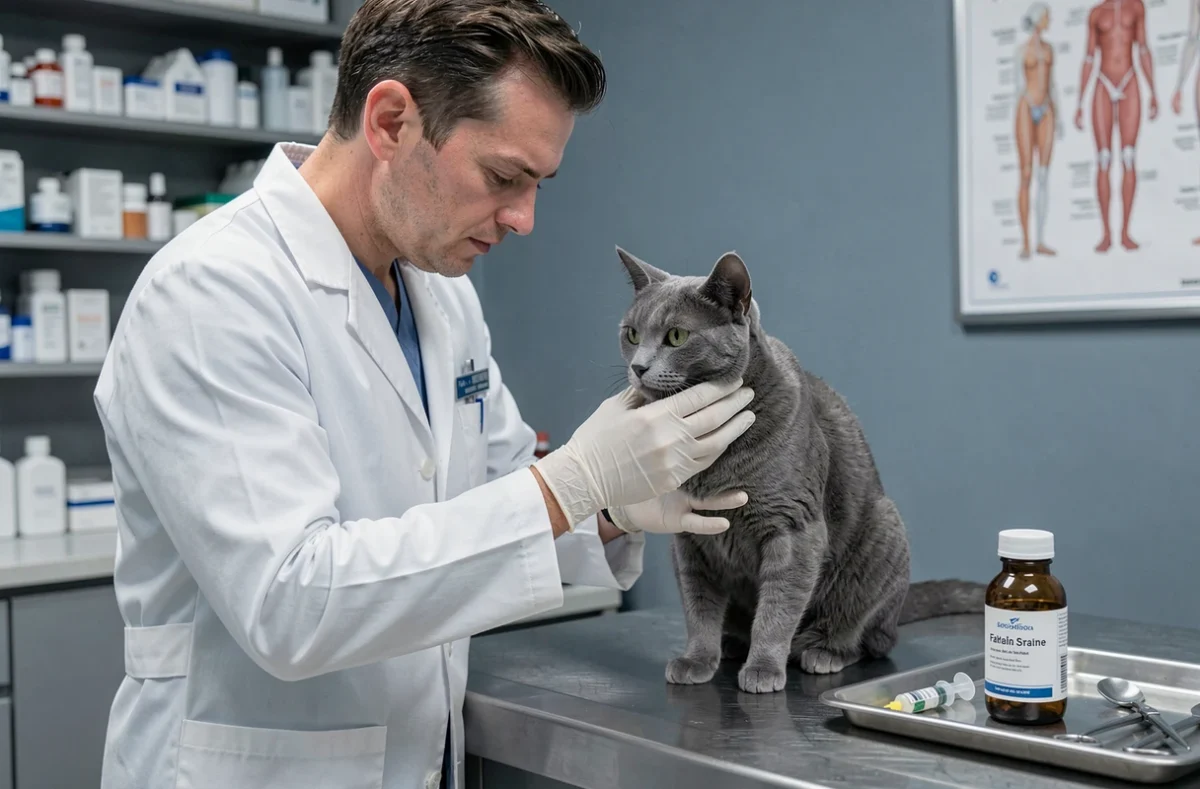
Metacam for cats: why dosing is so sensitive
Meloxicam works by inhibiting cyclooxygenase enzymes, which are responsible for inflammation. Cats metabolize this drug more slowly than dogs, which is why the dosages differ significantly between the two species.
One thing many pet owners don’t realize is that a “dose of Metacam” is not interchangeable between products. Products vary in concentration (the oral suspension for cats has a different strength from the one for dogs), form (injectable or oral), and sometimes approved uses depending on the country. Giving a cat the suspension intended for dogs, even after adjusting the volume, can cause a serious overdose.
Whenever you call your veterinarian after a dosing error, keep the packaging handy. The veterinary team will need to know the exact concentration, route of administration and species listed on the bottle.
Cats at increased risk
Not all cats respond to a dosing error in the same way. Dehydration, kidney disease or liver problems increase the risk of side effects, even when the dose appears to be correct. An older cat receiving long-term treatment for osteoarthritis needs extra monitoring, as its organs may be less efficient at filtering the medication.
Cats with low blood pressure or heart problems are also more vulnerable. Tell your veterinarian about these conditions after an administration error so they can adjust their monitoring accordingly.
Warning signs after a Metacam dosing error
The absence of immediate symptoms is not enough to assess the risk. Side effects from meloxicam can appear several hours after ingestion. Watch closely for the following signs:
- Repeated vomiting or nausea (your cat drools or licks its lips without eating)
- Reduced or complete loss of appetite in the hours that follow
- Diarrhea, especially if the stool is unusually dark or blackish, which may indicate digestive irritation
- Marked lethargy or a sudden change in behavior (your cat hides or avoids contact)
- Increased or decreased water consumption, which may be an early sign of kidney problems
Note the time of the error, the estimated amount and the last correctly administered dose. This information helps your veterinarian assess the situation quickly over the phone, without necessarily requiring an emergency visit.
Calling your veterinarian: when to call and what information to provide
Contacting your veterinary team promptly is advisable even if your cat seems fine. The toxic dose of meloxicam in cats is low, and waiting for symptoms to appear can make treatment more difficult.
Have the following information ready when you call:
- The exact product name and concentration (shown on the bottle, for example, 0.5 mg/mL)
- Your cat’s current or recent weight
- The time of the last correct dose and the time of the error
- The type of error: double dose, dose given to the wrong animal, dog medication given to the cat, or uncertainty about whether the medication was actually swallowed
If the error involved giving the medication to the wrong animal (for example, giving your cat the dog’s Metacam), contact your veterinarian immediately, even if there are no symptoms. The higher concentration of formulations for dogs makes this type of error particularly concerning in cats.
Should you make your cat vomit?
Never try to induce vomiting in a cat without veterinary advice. Home remedies (salt water, hydrogen peroxide) are dangerous for cats and could make the situation worse. Only a veterinarian can decide whether induced vomiting is appropriate, based on how much time has passed since ingestion.
After a Metacam dosing error in cats, the most helpful thing you can do is provide accurate information. With the exact time, likely amount and your cat’s general health details, a veterinarian can often offer reassurance and adjust the treatment over the phone.
Keep the medication packaging close at hand, record each dose in a notebook or app, and store your cat’s and dog’s medications separately if you have more than one pet. These simple habits prevent most incidents.