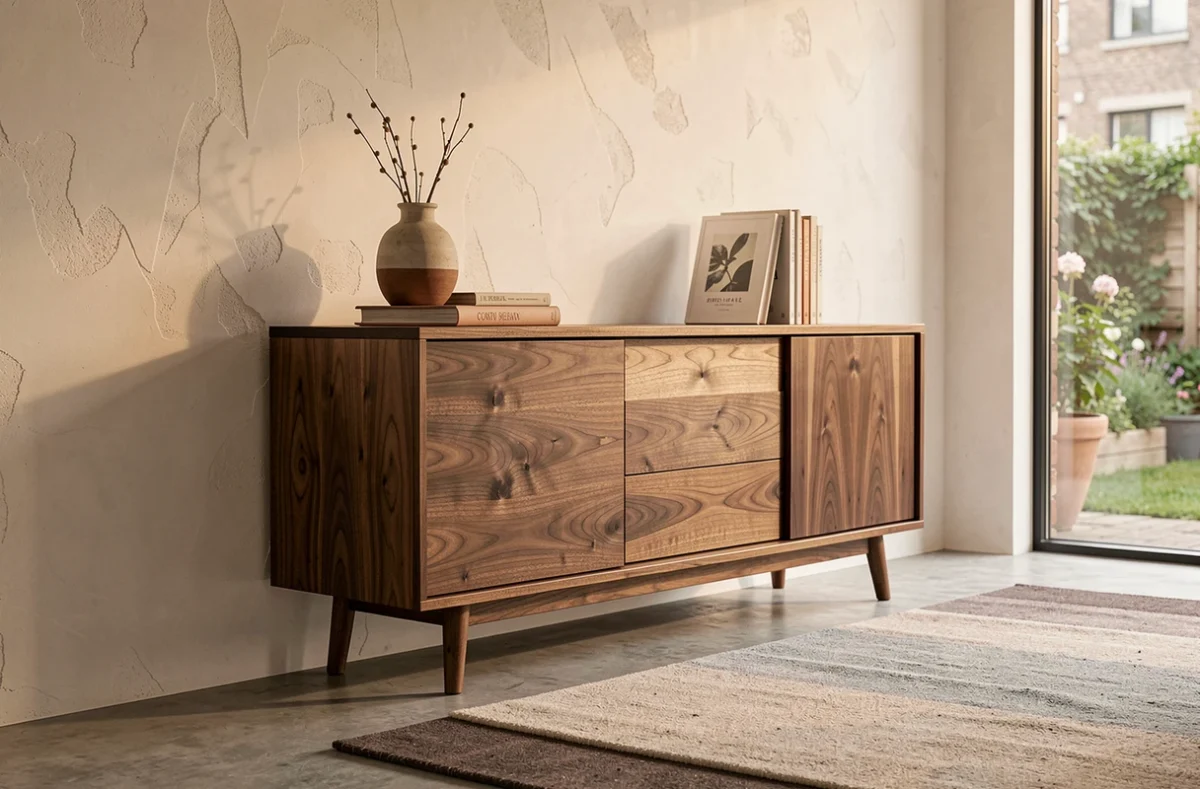
A solid walnut tabletop delivered with a poorly stabilized drying crack is something we’ve all seen at least once. High-end solid walnut furniture is not just about beautiful brown grain: the choice of origin, the quality of drying, and the finish determine the durability of the furniture for several decades. Understanding these technical parameters helps avoid paying a premium price for a disappointing result.
Traceability of Solid Walnut: What the European Regulation EUDR Changes
When purchasing a walnut table or sideboard, the question of the wood’s origin often takes a back seat. The European regulation against deforestation (RDUE/EUDR) will change the game for solid wood furniture.
Wooden furniture falls within the scope of this regulation, which requires demonstrating that the wood is legally harvested and comes from plots that were not deforested after December 31, 2020. Specifically, due diligence requires the scientific species, the country of production, and the geolocation of the forest plots.
The deadline is approaching: December 30, 2026, for medium and large companies, and then June 30, 2027, for micro and small enterprises. For a buyer of high-end furniture, this means that it is now possible to request precise information about the origin of the walnut, and a simple mention of “responsible wood” is no longer sufficient.
The obligations do not weigh the same way depending on the link in the chain. The company that first places the furniture on the European market submits the due diligence declaration. Downstream retailers have lighter obligations but must retain information and references.
When comparing two manufacturers, the one that spontaneously provides this traceability data offers a guarantee of seriousness that traditional catalogs do not yet show. To learn more about Atypik Home and their approach to solid walnut, their catalog precisely details the species and finishes offered.
Drying and Stability of Walnut: Traps to Spot Before Purchase
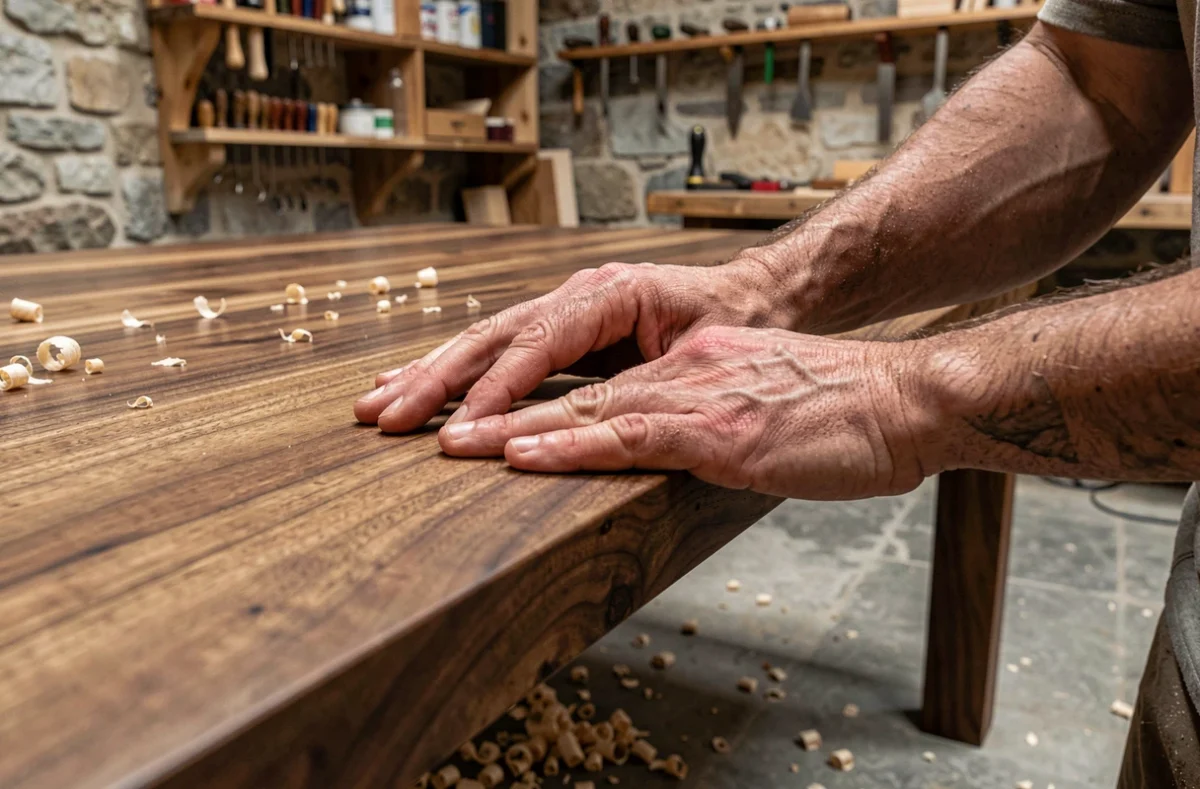
Walnut is a medium-hard wood with good dimensional stability, but this reputation only holds if the drying has been properly conducted. Too rapid drying causes internal tensions that manifest months after delivery: cracks, warping of the tabletop, joints that open.
Properly dried solid walnut descends to a moisture content suitable for indoor use, generally well below the rate it had in its raw state. Serious workshops practice mixed drying (natural then in a kiln) over several months.
Here are the points to check before confirming an order:
- Does the manufacturer mention the final moisture content of the wood? If they evade the question, it’s a warning sign.
- Are wide tabletops (dining tables, desks) made of glued boards with alternating grain orientations to limit movement?
- Is the finish (oil, varnish, wax) applied to all faces, including the underside? A tabletop finished only on the top absorbs moisture asymmetrically and ends up warping.
- Does the wood come from European walnut or American walnut? The aesthetic characteristics differ by species, and this choice influences the final appearance of the furniture.
Solid Walnut in Interior Decoration: Combine Without Overloading
Walnut has a strong visual character. Its pronounced grain and brown tones, ranging from light brown to dark brown with black veins, can quickly dominate a room if too many surfaces in this wood are accumulated.
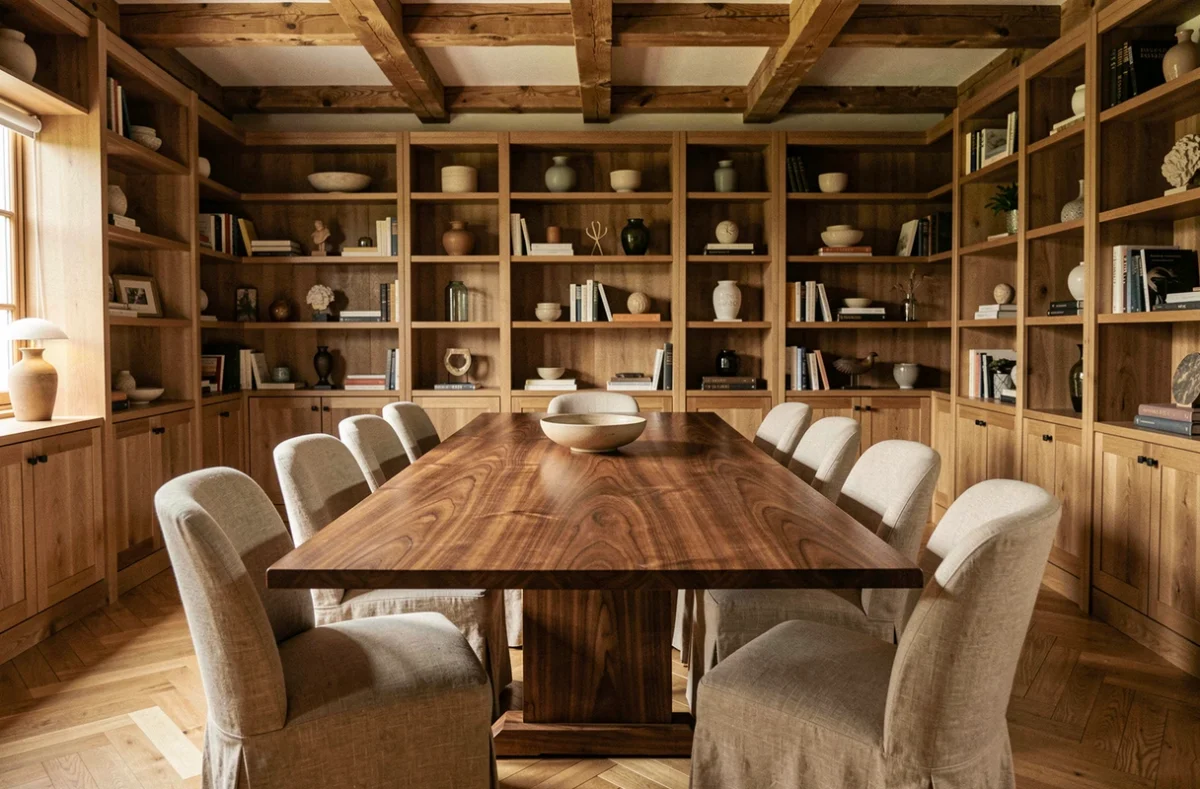
Limiting walnut to one or two statement pieces per space creates a better effect than a complete set. A solid walnut dining table paired with chairs in another material (metal, fabric on a light structure) creates a contrast that highlights the wood.
For walls and floors, neutral shades work best. Off-whites and light grays allow the walnut grain to express itself. Earthy tones (ochre, terracotta) enhance the natural warmth of the wood without creating visual competition.
In a bedroom, a solid walnut bed frame or headboard is enough to set the mood. Adding a dresser and nightstands in the same wood may visually close off the space, especially if the room lacks natural light.
Regular Maintenance of Walnut Furniture
Oiled solid walnut requires periodic refreshing: a layer of oil suitable for dark woods, applied in a thin coat and then wiped off. A varnished piece of furniture requires less regular maintenance but does not handle localized repairs well (a chip on a varnish is more noticeable than on an oiled surface).
Avoiding aggressive household products goes without saying, but the most common trap remains prolonged exposure to direct sunlight. Walnut lightens over time under UV effects, and this change can be very uneven if part of the furniture is protected by an object placed on it permanently.
Solid Walnut or Walnut Veneer: Understanding the Price Gap
A piece of walnut veneer furniture costs significantly less than a solid walnut piece. The price difference is explained by the amount of noble material used: veneer consists of a thin sheet of walnut glued onto a substrate (particle board or MDF).
Solid wood can be sanded, restored, and ages gaining character. A damaged veneer (deep chip, delamination) is not as easily repaired. On a dining table used daily, the mechanical resistance of solid wood makes a real difference in the long term.
Veneer has its place in certain contexts: decorative panels, storage fronts that are not heavily used, wall elements. For furniture that undergoes mechanical stress (tables, desks, seating), solid walnut remains the choice that holds up over time and justifies the initial investment for furniture meant to last through the years.