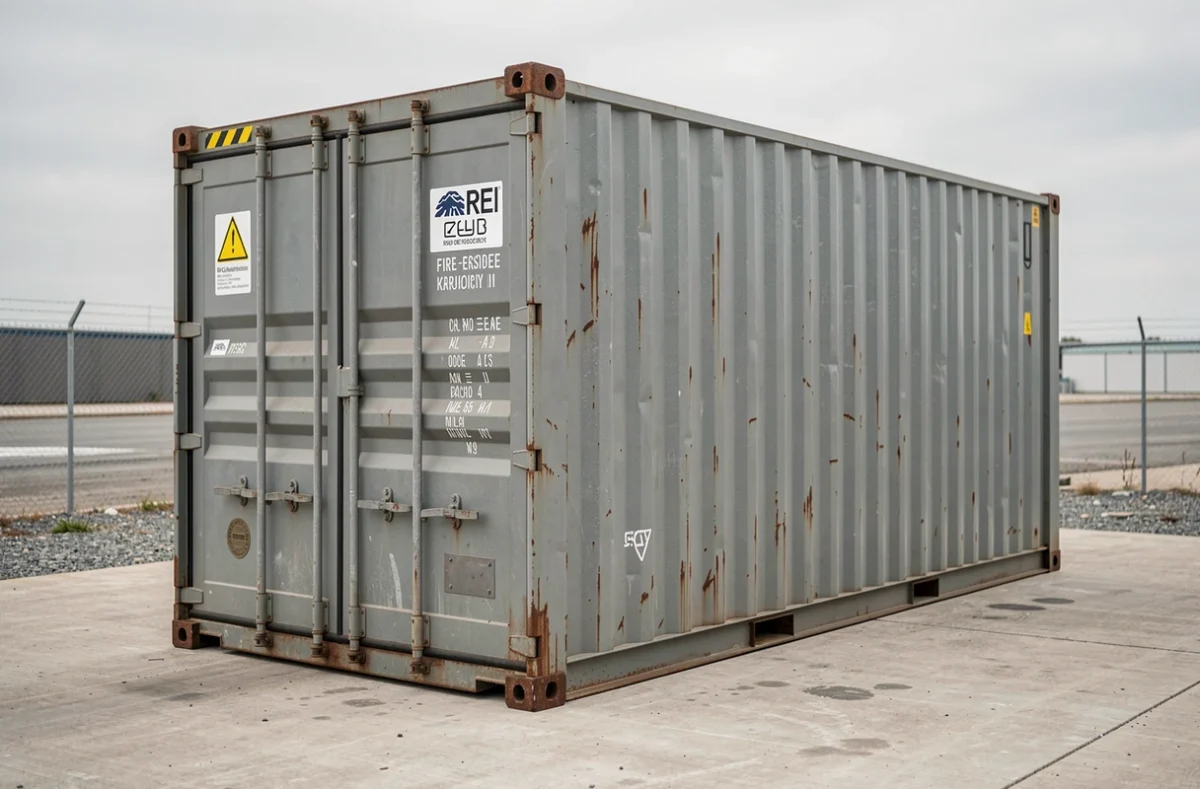
The REI 60 designation refers to a fire resistance rating measured in minutes: 60 minutes of performance in a fire, based on three separate criteria. When applied to a container, this rating does not automatically cover the entire module. It applies to a specific element (wall, floor, roof or assembly) and a given configuration, which can radically change the actual scope of the certification.
Criteria R, E and I: what each letter measures in a fire test
The REI classification is based on three performance criteria assessed separately during a standardised test. R stands for load-bearing capacity under fire conditions: the element does not collapse during the specified period. E refers to integrity against flames and hot gases: no cracks allow fire to pass through to the unexposed side. I measures thermal insulation: the temperature on the opposite face remains below a critical threshold.
An element can be rated R 60 without being rated EI 60. A load-bearing floor that remains stable for an hour does not necessarily prevent heat from passing through. When all three letters are combined in REI 60, the element performs all three functions simultaneously for at least 60 minutes.
To learn more about the fire resistance of an REI 60 container, it is important to understand that the classification is based on European standard EN 13501-2 for classification and the EN 1365 series for testing load-bearing elements. The test report specifies the configuration tested, including dimensions, fixings and boundary conditions. Any change to this configuration may invalidate the rating.

REI 60 container: why the rating does not cover the entire module
A shipping container converted into a plant room, office or storage space consists of steel walls, a floor, a roof and the joints between these elements. The REI 60 test report may apply to a single wall tested in a laboratory under specific conditions. This does not guarantee that the complete assembly, including its welds, joints and corners, achieves the same performance.
Joints and service penetrations are the weak points of a container in terms of fire resistance. A cable entry, ventilation duct or plumbing connection creates a break in the enclosure. If this break has not been tested or treated with a rated system (such as fire-stopping), the REI 60 rating of the adjacent wall does not extend to the penetrated area.
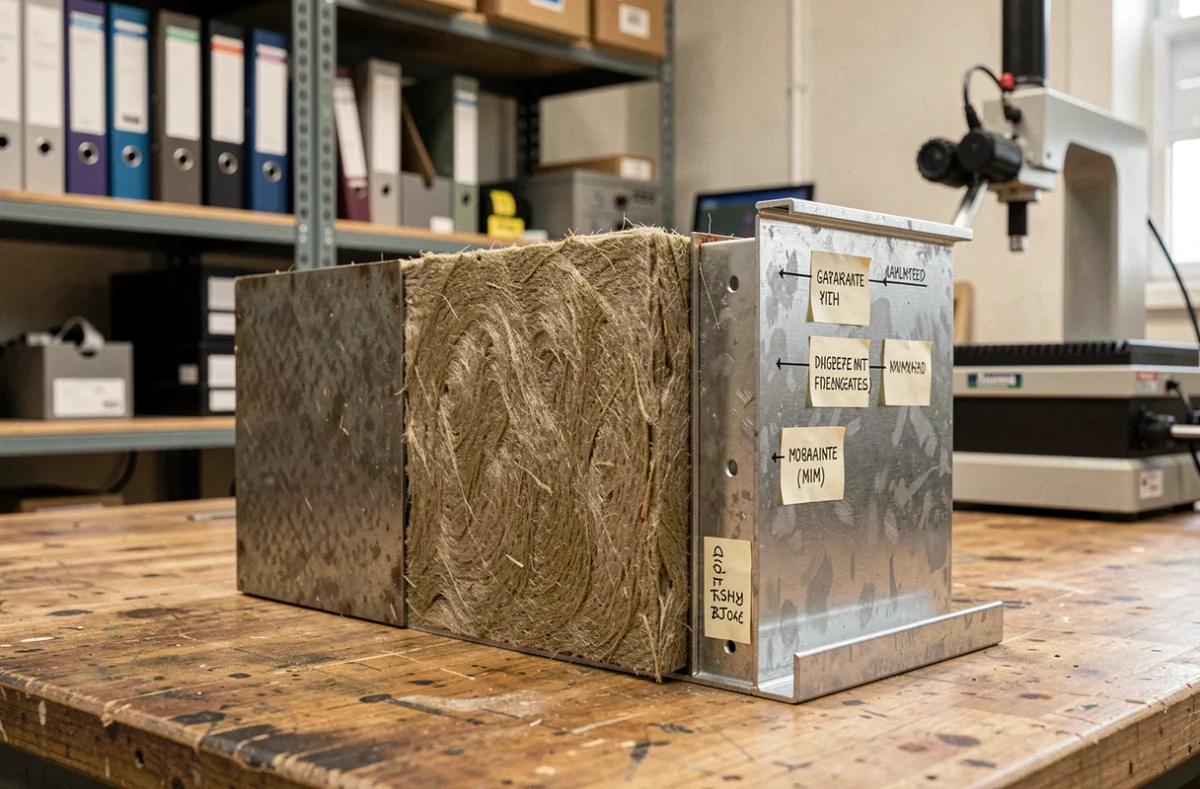
Manufacturers sometimes provide a product sheet stating “REI 60” without attaching the detailed test report. A substantiated file must include the test report applicable to the module’s actual configuration, not just performance measured on a sample of insulating material.
Penetrating a container wall: proving that the REI 60 rating remains valid
Installing a door, window or service system in an REI 60-rated container is the most challenging aspect of the fire safety documentation. Each opening changes the original configuration tested in the laboratory.
To maintain the validity of the rating after making an opening, several conditions must be met:
- The door or window installed in the opening must itself have a minimum EI 60 rating, with a test report covering its actual dimensions and installation method.
- The perimeter seal between the door or window and the steel wall must use a rated product or system whose field of application covers the type of substrate (steel) and the joint width.
- Service penetrations (cables, pipes, ducts) must be sealed using fire-stopping devices tested to the applicable standard, with a test report specifying the type and diameter of each service passing through.
- A technical assessment or laboratory opinion may be required if the installed configuration falls outside the field of application covered by the existing test reports.
A test report for an unpenetrated wall does not cover a wall with openings. The project owner must compile supporting documentation combining the wall test report, the door or window test report, the fire-stopping test report and, where applicable, a classification extension validated by an accredited laboratory.
Containers converted for use as public-access buildings or workplaces
A container used to accommodate the public is subject to public-access building regulations, which impose fire resistance requirements for walls, floors and doors depending on the type and category of the premises. The container’s transport approval does not constitute fire safety compliance. A container certified for maritime transport (ISO 1496) meets structural resistance criteria, not fire performance criteria for occupied spaces.
Similarly, a container used to store hazardous products is subject to the ICPE framework. The distinction between ADR approval (transport of dangerous goods) and the requirements for permanent on-site storage is explicit in the regulations. The applicable regime depends on the use and location, not the module’s format.
Reference standards and regulatory verification of an REI 60 container
The standards framework governing a container’s fire resistance is based on several complementary texts:
- EN 13501-2: classification of the fire resistance of construction products and elements based on test data.
- EN 1365 series: fire resistance test methods for load-bearing elements (walls, floors, roofs, beams and columns).
- Applicable French regulations, depending on the use: the Labour Code for workplaces, public-access building regulations for premises open to the public, and ICPE regulations for classified facilities.
Verification involves more than collecting product data sheets. It requires comparing the test report with the container’s actual configuration as delivered and installed. A building control body is generally involved to confirm that the technical documentation is consistent with the project’s regulatory requirements.
An REI 60 rating for a container is reliable only if the documentation covers the entire enclosure as installed, including openings. Without this traceability between the test and the construction site, the rating remains a laboratory result that offers no legal protection to the project owner.