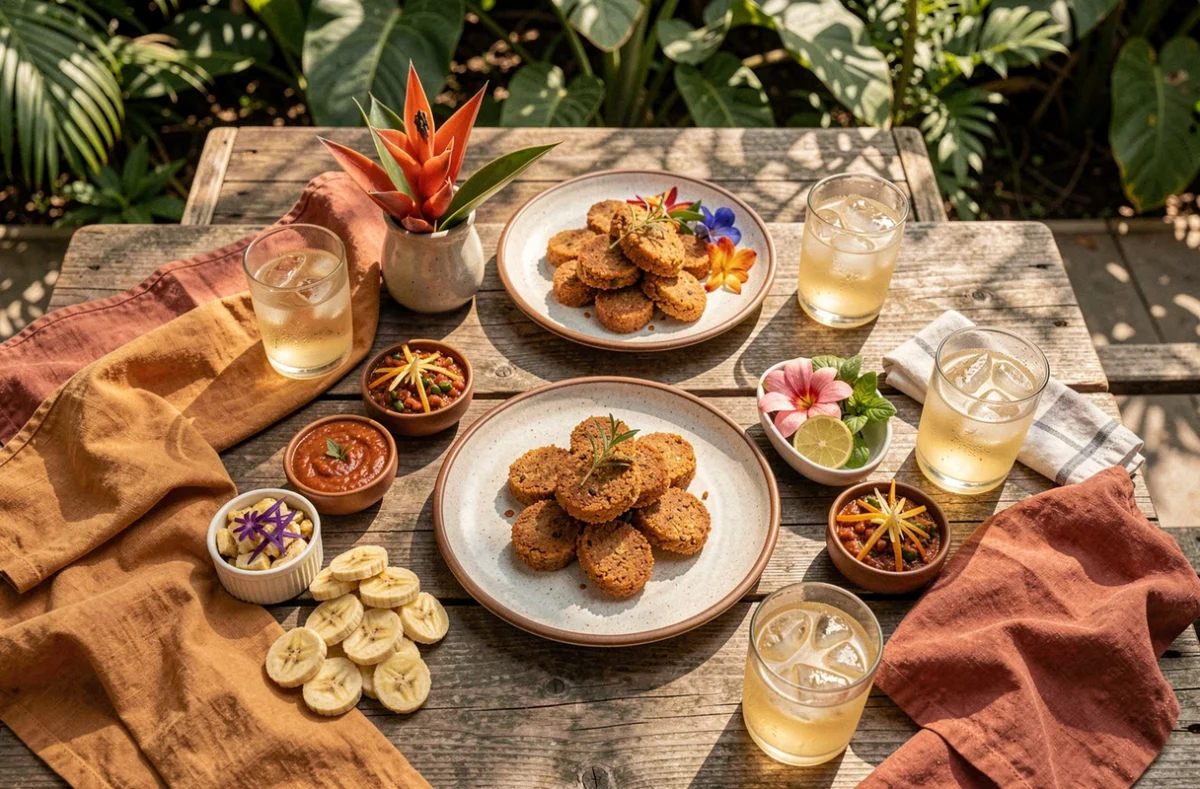
Bacalao fritters, spicy candies, smoked chicken skewers: Creole cuisine is full of bites that are shared while standing, glass in hand. Translating these flavors into a dinner aperitif raises questions that are less obvious than the choice of recipes. What are the real differences between a Creole buffet and a classic buffet in terms of allergens, transport, or preservation?
This article compares the two formats point by point to prepare a flavorful and well-managed Creole dinner aperitif.
Allergens in a Creole buffet compared to a classic buffet
Most classic dinner aperitif recipes revolve around cheese, cold cuts, and bread. The allergenic profile remains focused on milk, gluten, and sometimes mustard. A Creole buffet significantly broadens this spectrum.
| Category | Classic Buffet (metropolitan type) | Creole Buffet |
|---|---|---|
| Shellfish | Rare (shrimp cocktail) | Frequent (shrimp fritters, lobster candies) |
| Fish | Occasional (smoked salmon) | Very frequent (cod, marinated tuna) |
| Peanuts | Rare | Present in some sauces and marinades |
| Nuts | Cashews as an appetizer | Coconut (milk, grated) in many preparations |
| Mollusks | Rare | Possible (conch, octopus) |
| Sesame | Crackers | Some marinades and fritter batters |
| Mustard | Sauces | Dog sauce, Creole dressings |
In France, the European INCO regulation requires written information on the 14 regulatory allergens for non-prepackaged foods. This directly concerns a buffet served self-service or delivered by a caterer.
For a Creole aperitif, the list must be detailed dish by dish. A simple sign saying “contains shellfish” is not enough if some fritters contain cod and others shrimp. Using this as a transparency argument towards guests is a reflex that few organizers adopt.

Those who want to delve deeper into the topic of adapted recipes will find concrete ideas with Creole cuisine on TwimmCook, especially to identify bites compatible with various dietary restrictions.
Preservation and transport of Creole bites: pitfalls to avoid
Creole aperitif recipes often combine fried items, raw marinades, and sauces based on coconut milk. Each category poses distinct temperature constraints.
Fritters and spicy candies can be kept at room temperature for a few hours after frying, but they lose their crispness. In contrast, fish tartares, raw tuna marinades, or bites made with coconut cream require a strict cold chain between preparation and service.
The recommendations from the European regulation 852/2004 and the HACCP method apply as soon as a caterer or an individual delivers a buffet. Rapid cooling after cooking and transport in a refrigerated environment are two critical steps, often overlooked for a simple aperitif among friends.
- Fried bites (fritters, spicy candies, samosas) can be transported at room temperature if consumed within two hours after frying.
- Preparations made with raw fish or coconut cream must remain below refrigeration thresholds until served.
- Dog sauce or rougail, made with tomatoes, onions, and fresh chili, can be stored in the refrigerator and taken out just before serving to preserve their aromatic freshness.
The difference with a classic buffet is clear: cheese and cold cuts tolerate an hour at room temperature better than a marlin tartare or a warmed coconut soup.
Creating a balanced Creole dinner aperitif without an endless shopping list
The trap of a Creole buffet is to multiply recipes to the point of turning the kitchen into a production line. Three to four well-chosen preparations cover all the expected textures and flavors.
The base: one fried item, one marinade, one sauce
A functional Creole dinner aperitif relies on this triptych. The frying provides the crunch (cod fritters, spicy candies). The marinade or tartare offers freshness (raw fish with lime, vegetable achards). The sauce (dog sauce, rougail) connects the two.
This scheme allows you to cover at least five identifiable allergenic profiles and offer an alternative for each guest. A plate of raw vegetables accompanied by vegetable achards, for example, is suitable for those avoiding shellfish, fish, and nuts.
The complement: homemade bread and tropical fruits
Cassava bread or sweet potato cakes are excellent substitutes for classic baguettes. These options, naturally gluten-free, expand the buffet for intolerant guests. Fresh fruits (pineapple, mango, passion fruit) served in cubes or on skewers provide a sweet break between spicy bites.
The whole setup fits on a modest-sized table. Each element can be prepared in advance, freeing up time on the day itself.
Traceability of Creole products for a buffet in the metropolis
Smoked chicken, salted cod, vegetarian chili: these ingredients are available in the metropolis, but their origin varies. Since the evolution of French regulations on the origin of meats in 2025, indication of origin has become a relevant element of transparency for an aperitif organized in a semi-professional or associative setting.
For an individual, the question arises differently. Caribbean grocery stores in the metropolis offer imported products (chilis, colombo, coconut milk) whose labeling generally mentions the origin. Salted cod, a central ingredient in fritters, most often comes from Norway or Iceland, which sometimes surprises guests who associate it with the Caribbean.
Identifying the origin of ingredients is not a bureaucratic constraint. It is a conversation topic around the buffet and a way to highlight Creole know-how beyond mere tasting.
A successful Creole dinner aperitif is not measured by the number of recipes lined up on the table. Managing allergens dish by dish, respecting the cold chain for raw marinades, and choosing three to four complementary preparations make a bigger difference than multiplying bites. The cod in your fritters probably comes from Norway, and that’s just fine.