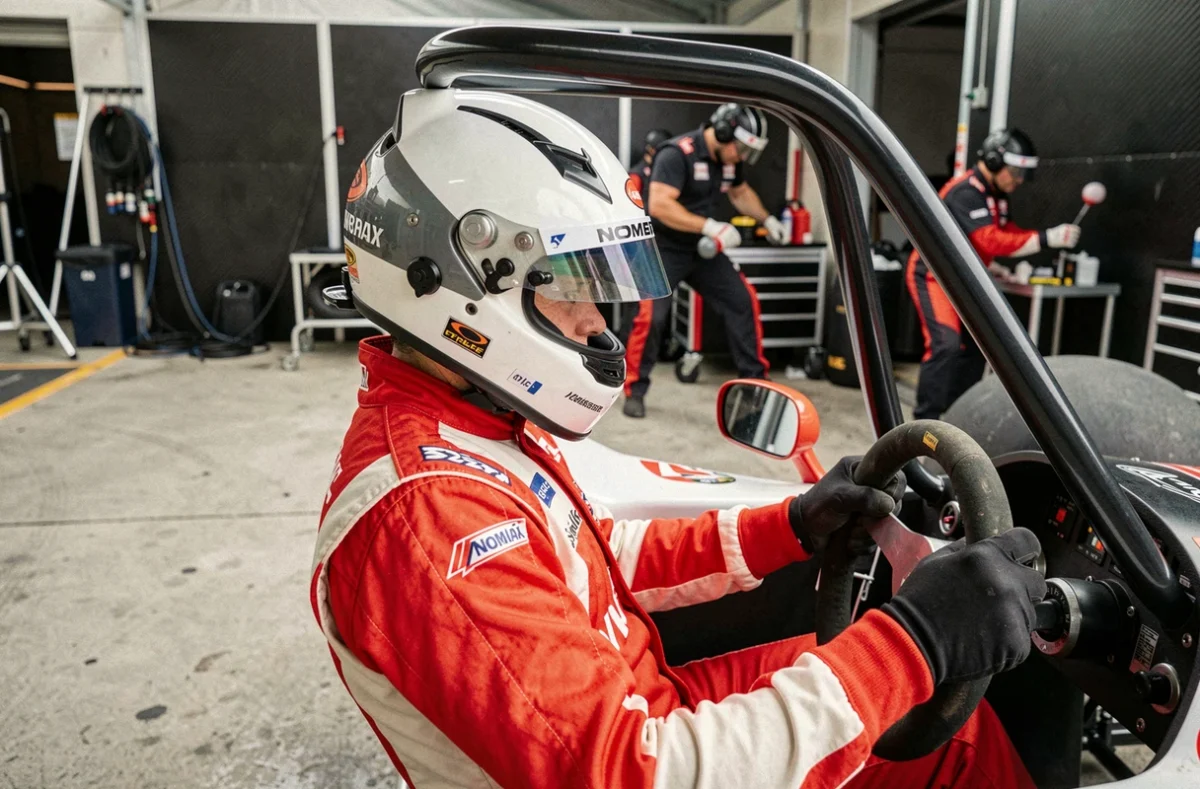
On a circuit, the first thing that strikes you is the noise. Even before seeing the cars pass by, you can feel the vibration of the engine in your chest. Motorsports are not just about watching cars go around in circles: they involve precise mechanical preparation, a real physical commitment from the driver, and technical choices that are sometimes made to the millimeter in the pits.
Mechanical preparation before a track session
Before putting a wheel on the track, there is a verification phase that most spectators never see. The vehicle undergoes a complete inspection: tire pressure adjusted to the exact degree based on ambient temperature, brake fluid levels checked, pads visually inspected.
On a technical layout with many heavy braking zones, the discs heat up well beyond what you encounter on open roads. A poorly prepared brake can make a car dangerous by the third lap. The safety cage fixings, harness, and onboard extinguisher are also checked. Nothing spectacular, but every overlooked point multiplies the risks.
The suspension settings vary according to the circuit profile. A fast layout with long curves calls for a low ground clearance and stiff dampers. A bumpy circuit with tight chicanes requires more travel. These decisions are made in consultation between the driver and the preparer, often in just a few minutes between two sessions. This world of passion and technical rigor can be found among both amateur motorsport enthusiasts and professionals.
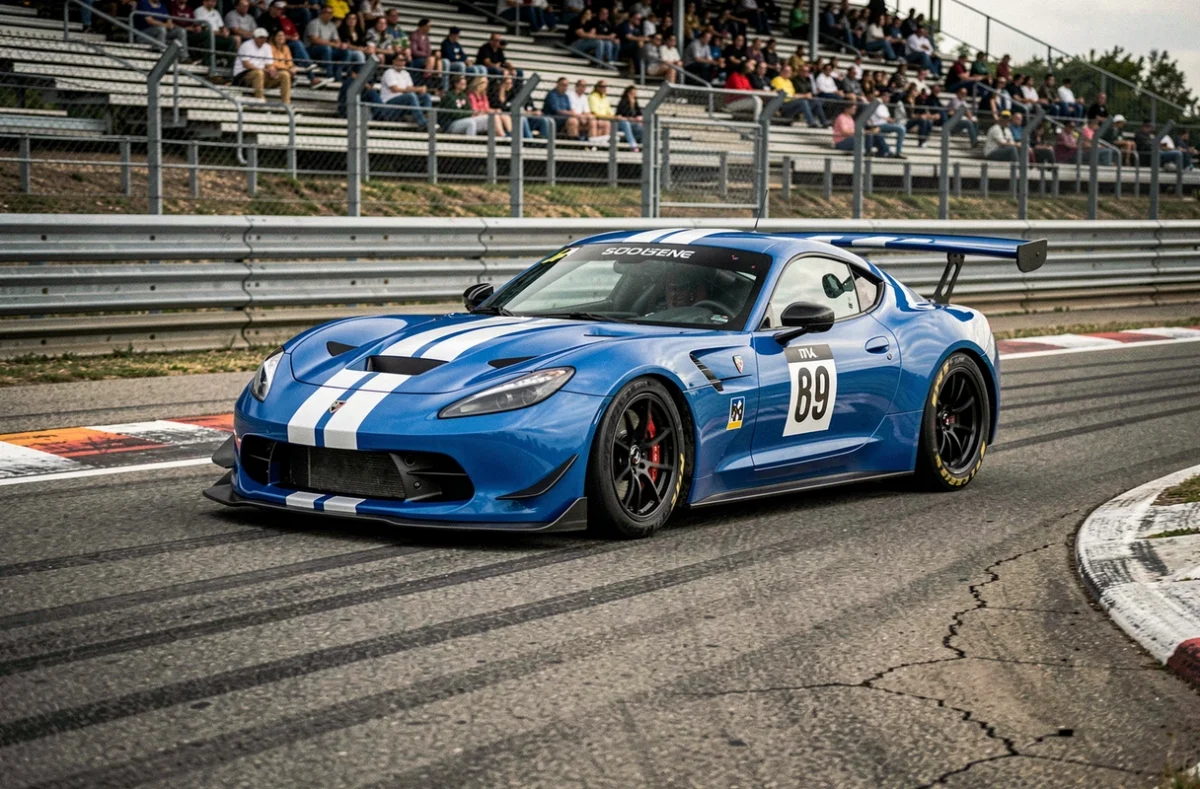
Driving on track: what the driver’s body endures
Motorsport is a physical discipline. A driver in endurance competition loses several liters of water per race. The lateral forces in corners continuously strain the neck, shoulders, and forearms for hours.
A driver’s heart rate during a race often exceeds that of a long-distance runner. The concentration required to execute precise braking, millimeter-perfect trajectories, and gear changes at the right RPM keeps the nervous system engaged at all times. A momentary lapse in attention at high speed is unforgiving.
Managing heat in the cockpit is another underestimated factor. The fireproof suit, helmet, and gloves reduce the body’s ability to dissipate heat. In summer races, the temperature in the cockpit rises significantly above the outside temperature. Teams that perform over the long term incorporate the driver’s physical condition into their overall strategy.
Endurance and sprint: two approaches to motorsport on track
Formula 1 is often contrasted with endurance events like the 24 Hours of Le Mans, but the distinction goes far beyond the time format. In sprint, every lap is optimized for pure speed. In endurance, there is a constant balancing act between performance and reliability.
A engine pushed to its maximum for twenty-four hours would not survive. Engineers therefore calibrate the power slightly below its maximum potential to preserve the mechanics. Driving also adapts: braking is smoothed out, tires are conserved, and fuel consumption is anticipated to space out pit stops.
- In sprint (Formula 1, short-distance GT), qualifying often determines the race. The fastest lap in free practice guides aerodynamic and mechanical settings.
- In endurance (WEC, 24 Hours of Le Mans), the strategy for driver changes and tire management over long stints weighs as much as raw speed.
- In rallying, the driver sometimes discovers the terrain in real-time despite the co-driver’s notes, requiring immediate adaptability to each turn.
These formats attract different types of drivers. A sprinter excels in pure attack on a flying lap. An endurance driver knows how to manage wear, fatigue, and pressure over time.
Hydrogen and electric: what changes concretely on the circuits
The energy transition in motorsport is not just about replacing an internal combustion engine with an electric one. Infrastructure constraints are transforming the circuits themselves. The president of the ACO has described the difficulties related to hydrogen refueling, notably the secure transport between the storage truck and the garages. These are not trivial logistical details: they determine the feasibility of the races.
In endurance, the rules being considered for the next generation of Hypercars could accommodate two distinct technologies: the fuel cell and the hydrogen-powered internal combustion engine. The technical choice remains open because the fuel cell still requires development to achieve the reliability needed in competition.
On the Formula E side, the next generation of single-seaters is presented as a leap in performance, not just as an environmental advancement. The challenge for organizers is to prove that electric racing provides as much adrenaline as thermal competition. Driving remains demanding: managing the onboard energy adds a strategic layer absent from classic races.
Accessing the track without a professional license
You don’t need to be a professional to drive on a circuit. Most tracks offer open days or driving courses accessible with a standard driver’s license. The vehicle can be personal, provided it passes a specific technical inspection on-site.
- Track days bring together drivers of varying levels, often divided into speed groups to limit disparities on the track.
- Guided driving courses provide the vehicle (single-seater, GT, sports sedan) and an instructor who accompanies the driver during the session.
- Wearing a certified helmet and suit is mandatory in most events, even in amateur track days.
The cost varies greatly depending on the format: a half-day track day with your own vehicle remains accessible, while a single-seater course represents a more significant budget. In any case, you leave the track with a concrete understanding of what automotive performance and high-speed risk management mean.
Motorsports continue to evolve under the pressure of new powertrains and infrastructure constraints. The ACO and FIA have formalized an extension of their partnership for the WEC, ensuring a stable regulatory framework for the coming years. For enthusiasts and the curious alike, the circuit remains the only place where you can truly measure what a vehicle and a driver can achieve together.