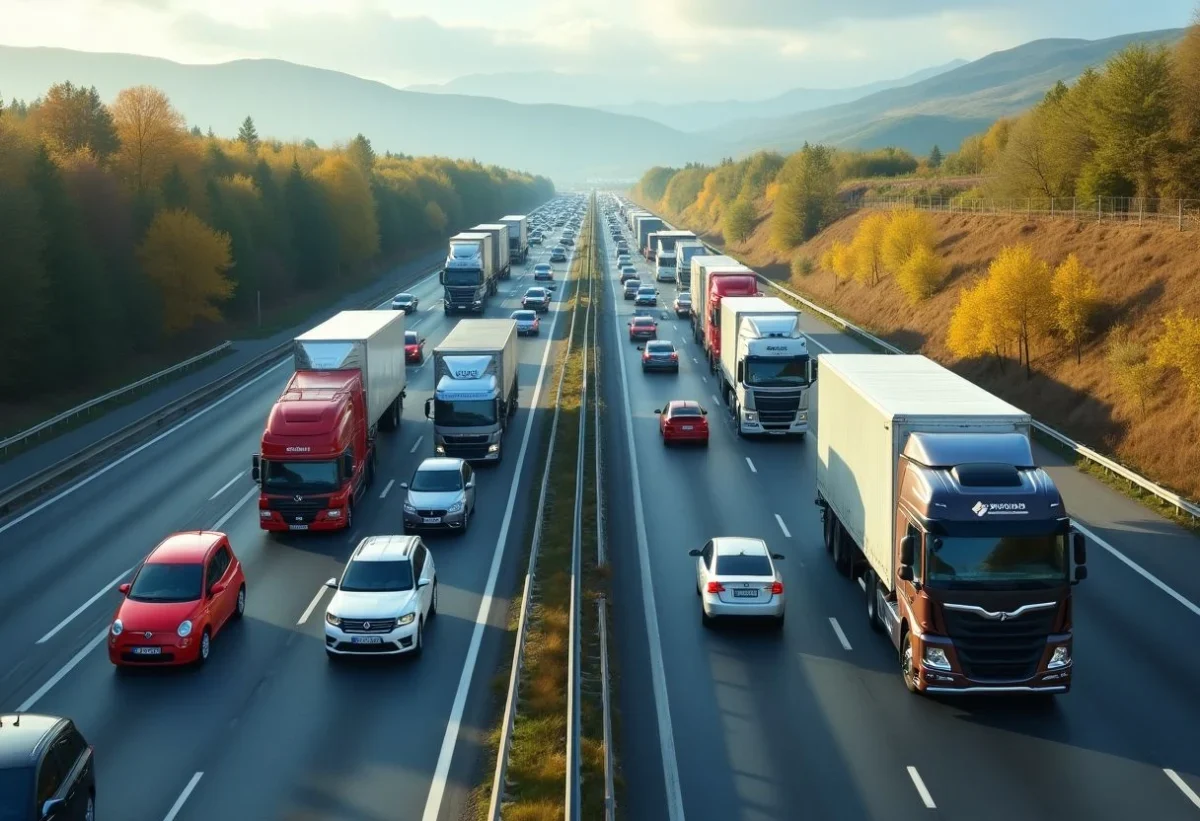
Trade between France and the United Kingdom has always been of paramount importance for both nations, representing a considerable volume of goods transiting daily across the Channel. Since Brexit, the landscape of freight transport has evolved, introducing new regulations and requirements that necessitate rapid adaptation from businesses.
Current logistical challenges
Freight transport between France and the United Kingdom involves numerous obstacles, particularly since the UK’s exit from the European Union. Companies must face significant logistical challenges.
The implementation of new customs controls has considerably slowed the passage of goods. Carriers must now manage administrative formalities and enhanced inspections, thereby increasing delivery times. This situation has created a crucial need for planning and anticipation to avoid delays.
Moreover, health and phytosanitary regulations have tightened. Food products, for example, are subject to strict inspections to ensure compliance with the standards of each country. This requires close coordination between shippers and carriers to avoid losses and damage.
Solutions proposed by carriers
In the face of these challenges, specialized carriers have developed effective strategies to ensure the continuity of trade.
- Carriers have invested in advanced technologies to track their shipments in real-time. This allows companies to receive regular updates on the status of their goods.
- They have strengthened their teams of customs declarants, experts in documentation and customs procedures, to facilitate the rapid processing of formalities.
- A network of logistics partners has been established to ensure increased flexibility, allowing for the quick rerouting of shipments in case of problems.
Role of carriers in the Franco-British economy
The contribution of carriers to the economy is undeniable, ensuring the smooth flow of trade between the two countries. They play a pivotal role in the logistics chain.
- By facilitating bilateral trade, carriers stimulate the local economy and create jobs, thereby strengthening economic relations between France and the United Kingdom.
- Innovation is at the heart of their activities, offering customized solutions that meet the specific needs of clients, including tailored transport services for small and medium-sized enterprises.
Future prospects
The transport sector between France and the United Kingdom continues to evolve, influenced by geopolitical and economic changes. So, what are the future prospects for these exchanges?
The transition to more sustainable transport modes is a priority. Carriers are investing in eco-friendly vehicle fleets to reduce their carbon footprint and meet growing environmental expectations.
The development of new trade routes and the improvement of port infrastructures are also underway, aiming to optimize the flow of goods. This includes increased use of digital technologies for more efficient logistics management.
Industry professionals, such as transporteur angleterre, continue to innovate to meet future needs, focusing on flexibility and responsiveness to unforeseen events.