
Herbal medicine for dogs refers to the use of plants or plant extracts for functional support: joint comfort, digestion, stress management. These products are presented as dietary supplements, not medications. This distinction has direct consequences on what a manufacturer can promise and the level of evidence required.
Dietary supplement or veterinary medicine: a regulatory boundary to know
A plant-based dietary supplement for dogs is not subject to the same efficacy and toxicity evaluations as a veterinary medicine. In the European Union, a supplement cannot claim to prevent or treat a disease. Formulating “treats arthritis” would shift the product into the category of medicine, requiring market authorization.
The statement “supports normal joint function” falls under a different register, but it still needs to be justified by the manufacturer. The absence of market authorization does not mean that a supplement has been evaluated with the same rigor as a medicine. This nuance changes the way labels are interpreted: a functional claim is not therapeutic proof.
Before purchasing a product labeled “herbal medicine,” checking whether the formulation of its benefits remains within the dietary framework or uses medical vocabulary helps assess the brand’s seriousness. Rigorous manufacturers stick to measured claims, as explained by the website Les Chiens ne font pas des Chats in its guide dedicated to natural supplements.
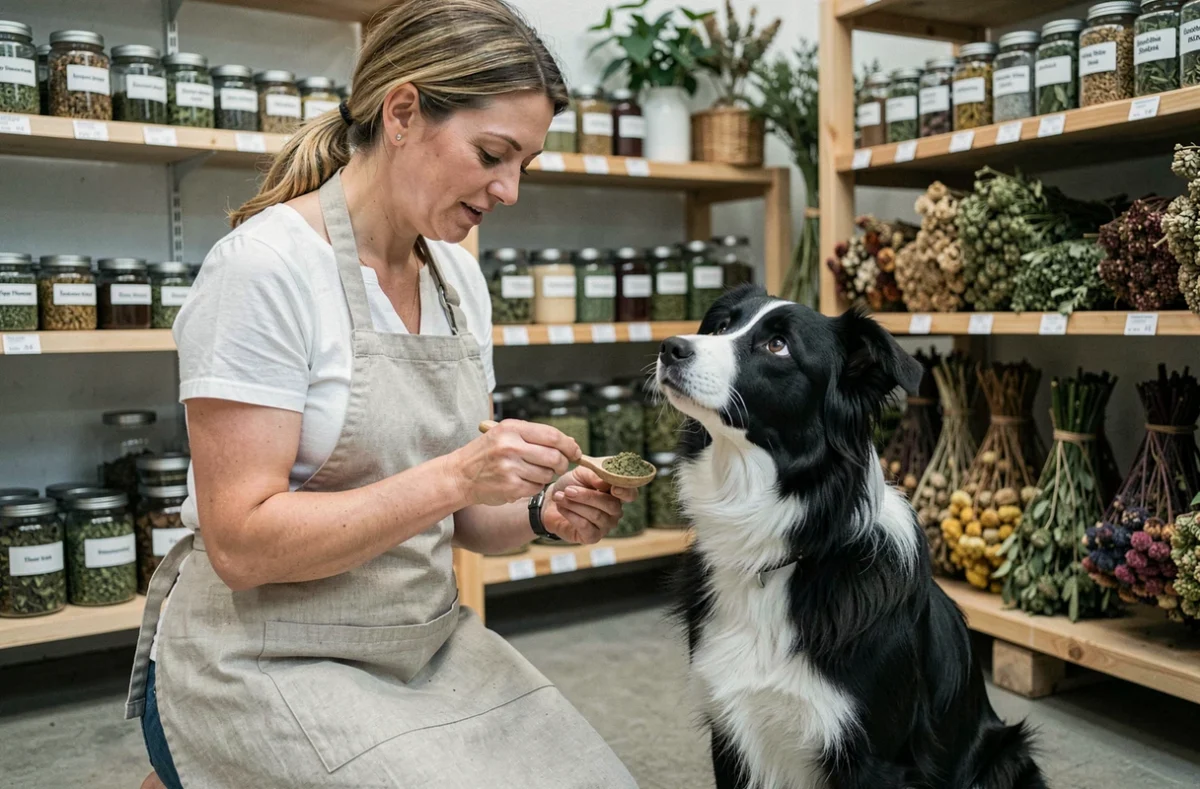
Anti-stress plants for dogs: valerian, passionflower, and their limits
The plants most often offered to reduce canine anxiety are valerian, passionflower, and chamomile. Each has a slightly different action profile, and their effectiveness depends on the galenic form (dry extract, mother tincture, powder) as well as the dosage.
Valerian is used for its mild sedative properties. It can promote relaxation in a dog facing a one-time event (transport, fireworks). Passionflower acts in a similar way, often combined with valerian in commercial formulations to broaden the spectrum of action.
Points of caution before using a calming plant
- The dosage suitable for the dog’s weight varies according to the extracts: a concentrated product for humans is not appropriate as is for a small breed animal.
- Some plants interact with medication treatments, particularly sedatives or anti-epileptics prescribed by the veterinarian.
- The effect of a single plant does not replace behavioral work when stress is related to an underlying disorder (separation anxiety, hyperreactivity).
A plant-based supplement can accompany a comprehensive approach. Administered alone, without identifying the source of stress, it masks a symptom without solving the problem.
Omega-3 and joint support: what veterinary data says
For the joint comfort of aging dogs, two categories of supplements dominate the market: omega-3 fatty acids (from fish oil or microalgae) and glucosamine-chondroitin combinations.
Their level of scientific support is not equivalent. A systematic review published in 2022 found no significant analgesic benefit for glucosamine-chondroitin combinations in dogs. Omega-3 enriched diets or supplements, on the other hand, have a more favorable body of evidence regarding joint function support and inflammation modulation.
Omega-3s have a better level of evidence than glucosamine for canine arthritis. This does not mean that glucosamine is useless in all cases, but that an owner wishing to prioritize their purchases should start with omega-3s.
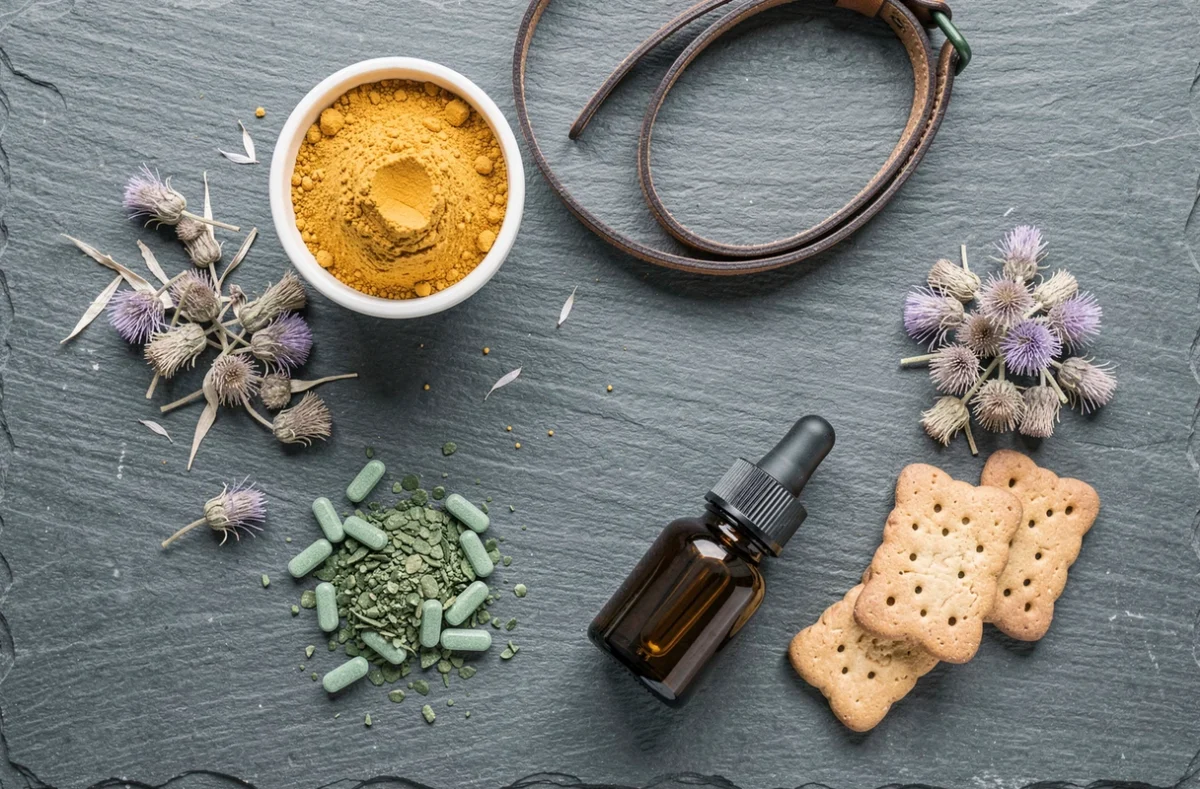
Probiotics: results vary by strain
Probiotics for dogs are experiencing a similar surge in popularity. Their effectiveness depends on the bacterial strain, the product, and the targeted disorder. The ENOVAT recommendations of 2024 do not provide a general recommendation for or against probiotics in acute diarrhea in dogs, reflecting the heterogeneity of available results.
A probiotic suitable for a dog suffering from chronic digestive issues will not have the same effect on a healthy animal. Asking the veterinarian which strain has been studied for the dog’s specific problem remains the most reliable approach.
Criteria for choosing a natural supplement for dogs
Given the abundance of products, a few concrete criteria allow for sorting the offerings without relying solely on marketing.
- Transparency about the composition: a serious manufacturer indicates the part of the plant used, the extraction method, and the dosage per serving, not just “plant extract.”
- The adequacy between the claim and the regulatory framework: any promise of healing is a warning signal.
- The existence of studies or veterinary references cited for the formulation, even partial, rather than a simple appeal to “natural.”
- Consideration of the dog’s size and health status: a supplement for an old large breed dog does not have the same dosage as for a young small breed dog.
Herbal medicine for dogs offers interesting avenues, provided one keeps in mind that “natural” does not mean “risk-free” or “proven.” The veterinarian remains the primary contact for adjusting a supplement to the animal’s actual situation, especially when it is already undergoing medical treatment.